Course Overview

This course introduces educators to the Brain-Ready Classroom approach to learning and instruction.

It translates research from neuroscience and learning science into instructional practices grounded in learning science that educators can apply immediately in their classrooms.

When the brain is ready to learn, students are more able to focus, participate, retain information, and persist through challenges.

Through real classroom demonstrations, reflective exercises, and implementation strategies, participants learn how to create classroom conditions where students feel safe, capable, and motivated to learn.

The Brain-Ready Classroom approach emerged from Selina Jackson’s work with educators and students across classroom and professional learning environments.

Why This Course Matters

In many classrooms today, teachers are expected to deliver rigorous academic content while students arrive carrying stress, distraction, and emotional overload. When the brain is not ready to learn, even the best lesson plans can fall flat.

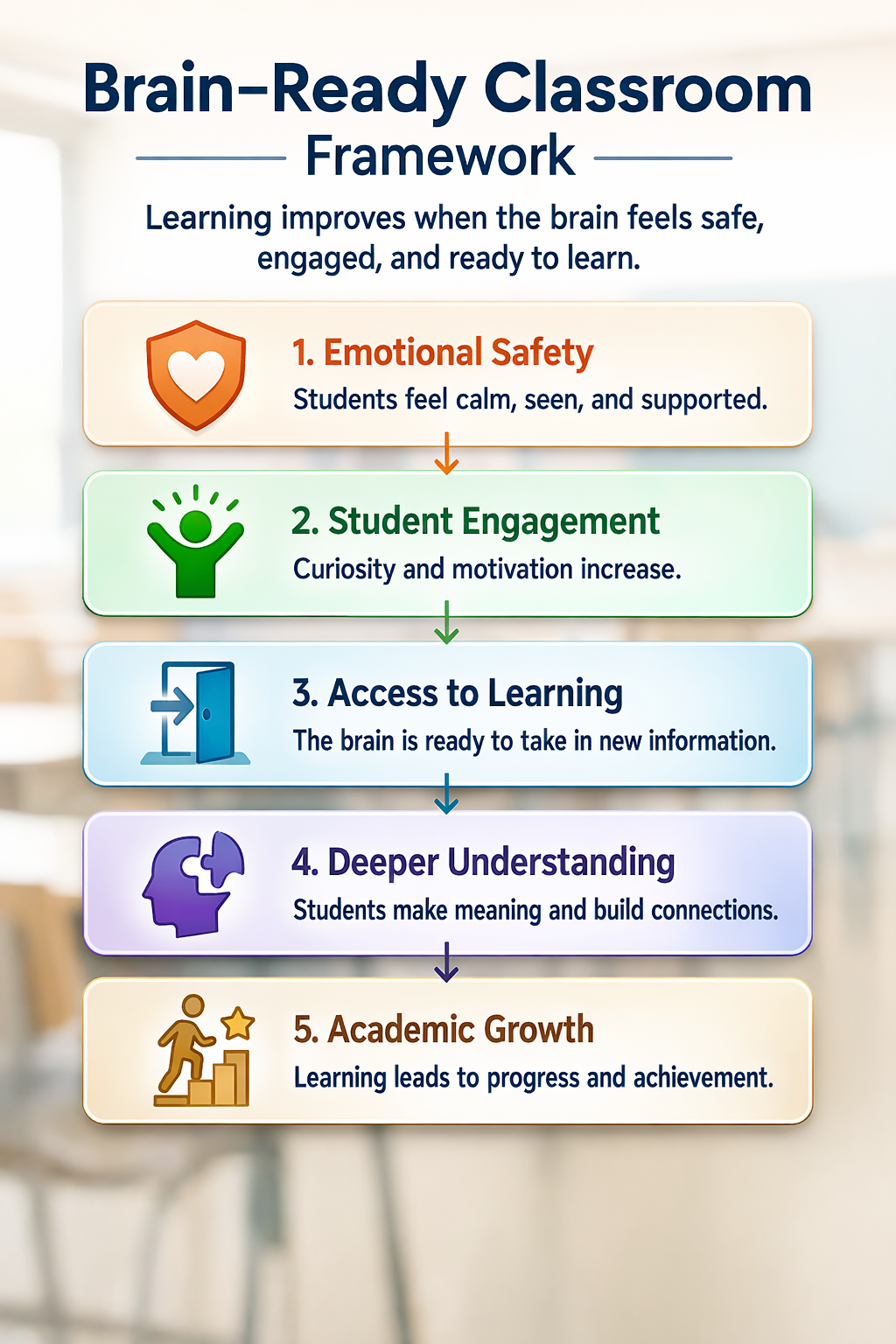
Research in neuroscience and learning science shows that emotional safety, engagement, and connection are foundational conditions for learning. When these conditions are present, students are more able to focus, participate, retain information, and persist through challenges.

This course introduces educators to the Brain-Ready Classroom approach, which focuses on creating the conditions that allow learning to occur before academic content is delivered.

Through real classroom examples, practical teaching strategies, and reflective exercises, participants will learn how to:

• reduce resistance and classroom disruption
• increase student engagement and participation
• restore access to learning when students become frustrated or overwhelmed
• create classroom environments where both teachers and students thrive

Rather than adding more tasks to teachers’ already full plates, this course provides practical breakthroughs that make teaching more effective and learning more accessible.

Educators will leave with strategies they can immediately apply to create classrooms where students feel safe, capable, and ready to learn.

Course Objectives

This course includes real classroom demonstrations.

Part 1 – Teacher Awareness and Brain-Ready Foundations

Participants will:

• Understand how emotional safety and nervous system regulation affect students’ readiness to learn.
 • Reflect on their own teaching beliefs, communication patterns, and influence in shaping classroom culture.
 • Recognize how teacher stress and cognitive overload affect instructional effectiveness.
 • Develop strategies that support teacher clarity, confidence, and resilience.

Part 2 – Creating Brain-Ready Classroom Conditions

Participants will learn how to:

• Create classroom environments that reduce stress and increase student readiness to learn.
 • Recognize underlying needs and emotions behind challenging student behavior.
 • Use practical strategies to calm dysregulated students and restore access to learning.
 • Establish classroom routines that support independence, structure, and engagement.

Part 3 – Understanding How Students Learn

Participants will:

• Explore how the brain’s natural biases influence attention, motivation, and learning.
 • Recognize differences in student learning preferences and processing styles.
 • Apply differentiated strategies that support diverse learners.
 • Use learning experiences that maximize retention, understanding, and participation.

Part 4 – Motivating Students for Meaningful Learning

Participants will learn how to:

• Connect academic learning to students’ real-world interests and aspirations.
 • Design learning experiences that increase curiosity, relevance, and motivation.
 • Use visual and experiential tools to help students see their potential and future success.
 • Re-engage disengaged students by restoring meaning and purpose in learning.

Part 5 – Communication and Learning Access

Participants will:

• Understand how communication styles influence student engagement and behavior.
 • Use language patterns that increase clarity, understanding, and motivation.
 • Strengthen relationships with students through respectful and responsive communication.
 • Foster inclusive classroom environments that support diverse learners.

Part 6 – Teacher Well-Being and Sustainable Practice

Participants will:

• Recognize the connection between teacher well-being and classroom effectiveness.
 • Develop practical habits that support resilience, balance, and sustained enthusiasm for teaching.
 • Implement strategies that prevent burnout and support long-term professional fulfillment.

Part 7 – Real-World Classroom Applications

Participants will:

• Apply Brain-Ready Classroom strategies to real teaching situations.
 • Reflect on classroom experiences and identify opportunities for improvement.
 • Use practical tools to increase engagement, comprehension, and collaboration among students.

Part 8 – Practical Breakthrough Strategies

Participants will:

• Implement classroom techniques that quickly restore focus and engagement.
 • Use movement, visuals, and experiential learning to deepen understanding.
 • Apply simple but powerful strategies that create meaningful shifts in student participation and learning.

Course Outcome

By the end of this course, educators will be able to create Brain-Ready Classrooms where students feel safe, engaged, and capable of learning. Teachers will gain practical strategies that strengthen classroom relationships, improve student motivation, and support deeper academic understanding.

Participants will leave with tools they can immediately apply to transform classroom dynamics and help students access their full learning potential.

Course Structure & Learning Engagement

This course is designed as an interactive professional learning experience combining video instruction, reflection, and real-world classroom application.

Participants engage in the following learning activities:

Video Learning Modules
Educators watch instructional videos demonstrating Brain-Ready Classroom strategies being implemented in real classroom environments.

Guided Reflection
Participants complete reflection prompts that help them connect course ideas to their own teaching practice.

Classroom Implementation
Participants apply Brain-Ready Classroom practices in their classroom and observe how Brain-Ready conditions affect student engagement and learning.

Practical Teaching Experiments
Participants test specific techniques designed to increase motivation, focus, and participation.

Professional Reflection
Educators reflect on outcomes and identify next steps for improving classroom learning conditions.

Total estimated engagement time: 15–30 hours, depending on the level of classroom implementation and reflection.


Evidence of Impact

The Brain-Ready Classroom approach has been implemented in real classroom environments and professional development workshops with educators and students.

Through these experiences, educators have reported meaningful improvements in several areas of classroom functioning, including:

• increased student participation and engagement
• reduced classroom disruptions
• improved classroom relationships
• increased student confidence and willingness to attempt challenging work
• more positive classroom climate and learning environment

The course includes video demonstrations showing Brain-Ready Classroom strategies being implemented with real students and teachers. These authentic examples allow participants to observe how practical teaching approaches can shift classroom dynamics and restore access to learning.

Educators who participate in these experiences frequently report that when classroom conditions prioritize emotional safety, clarity, and engagement, students become more willing to participate, persist, and succeed academically.

By observing real examples and implementing strategies in their own classrooms, participants gain practical insight into how small changes in classroom conditions can lead to meaningful shifts in student behavior, motivation, and learning.

The Brain-Ready Classroom approach reflects a growing body of research emphasizing the importance of emotional safety, engagement, and cognitive readiness as foundations for effective learning.

Who This Course Is For

This course is designed for educators who want to strengthen both student engagement and instructional effectiveness by creating Brain-Ready learning environments.

It is particularly valuable for:

K–12 Classroom Teachers
Educators seeking practical strategies to increase engagement, reduce behavioral disruptions, and help students access learning more consistently.

Instructional Coaches and School Leaders
Professionals supporting teachers in implementing effective classroom practices that improve both learning conditions and academic outcomes.

Special Education Teachers and Support Staff
Educators working with students who may experience emotional, behavioral, or learning challenges that interfere with classroom participation.

New Teachers
Educators looking to build strong classroom foundations and effective teaching habits early in their careers.

Experienced Educators
Teachers who want to refresh their approach and rediscover strategies that bring greater joy, clarity, and effectiveness to their work.

Whether educators are teaching elementary, middle, or high school students, the Brain-Ready Classroom approach provides practical tools that support both academic success and emotional well-being in the learning environment.


This course includes video demonstrations of Brain-Ready Classroom strategies implemented with real students in authentic classroom environments.

Course curriculum

    1. ⭐ WELCOME TO BUILDING BRAIN-READY CLASSROOMS FOR DEEPER LEARNING

    2. The Brain-Ready Classroom Framework

    3. Reflection: Noticing the Learning Funnel

    4. Humorous Story: The Chocolate vs. Reading Mystery

    5. Watch What Happens Whe Her Brain Likes Reading Again

    6. Feel Good First: When Kids Beg to Do Math

    7. Research Foundations

    8. Super Learning Breakthroughs- Building Brain-Ready Classrooms for Deeper Learning Course Objectives

    9. ⭐ Real Success Stories — Proof That This Works

    10. Success Stories - From Hopeless to All A's

    11. How This Principal's School Was Transformed

    1. SECTION: Teacher Self-Discovery

    2. INTRODUCTION

    3. Welcome! How to Make the School Day Less Stressful

    4. Clarity For You

    5. Achievement Diagnostic - Rate Your Classroom

    6. The 16-Letter Word Breakthrough (Great example of mindset and learning potential)

    7. Three Secrets that Cause Learning Problems (And What You Can Do about it)

    8. SECRET #1 - What They DON'T Teach Teachers about Learning

    9. Claim Your Confidence - Testing with Ease!

    10. SECRET #2 - Unclear Values Sabotage Learning

    11. SECRET #3 - School Problems are People Problems

    12. The Power of Influence

    13. She Felt Hopeful for the First Time

    14. Test Your Skills

    1. Emotional Mastery for Educators

    2. Eliminate Stress by Dissolving Negative Brain Loops

    3. How Do You Keep Your Cool?

    4. Stress Master Reflection

    5. Calm Your Mind with Crazy 8's

    1. 🌟 The Brain Science Behind Super Learning Breakthroughs

    2. 🌈 Why Mood Is the Foundation of Learning

    3. 💫 EMOMASTERS® Characters & Their Neuroscience Powers

    4. 🔥 Real-Life Challenges

    5. 🌟 REAL WORLD CHALLENGE: "Mood First” Learning Experiment

    6. 🏆 Wrap-Up — Your FIRST Super Learning Breakthrough

    7. EMOMASTERS LAB: Your Brain. Your Mood. Your Learning Power.

    1. When Kids Feel Good Behavior Changes

    2. 👓 The Two Lenses of Effective Teaching

    3. 👓 The Two Lenses of Effective Teaching (Part 2)

    4. Surviving Playtime and Recess

    5. Step Charts for Independent Learning Activities

    6. Using Step Charts to Manage Behavior Easier

    7. Get Them Quiet FAST (Especially Before Recess)

    8. Optimizing Your Classroom Climate

    9. Special Access to My Real Life Sessions with Kids

    10. Why People Do What They Do

    11. How this Middle School Teacher Overcame Struggles and Found the Freedom to Bring out the BEST in Himself

    12. Three HIDDEN Reasons for Your Students' Behavior

    13. How One SMART Teacher Transformed Her Class from Chaos to Calm

    14. Is Your Discipline Style Clashing with Your Students' Brain Function?

    15. How to Calm an Upset Child

    16. Influential Language (for Getting Kids to Say YES When They Want to Say NO)

    17. Creative Ways to Use the Double Command to Get More Work Done

    18. Calming Strong Emotions

    19. Copy of Use the Questioning Strategy to Gain Compliance Easier

    20. Copy of The Power of Your Questions

    21. Copy of VIDEOS for Maintaining Student Attention

    22. VIDEOS for HANDLING DISRUPTIVE BEHAVIOR

    23. Master Class on Activating Critical Thinking to Eliminate Unwanted Behavior - Part 1

    24. Master Class on Activating Critical Thinking to Get Rid of Unwanted Behavior - Part 2

    1. Introduction - Getting Students Ready to Learn

    2. REALTIME VIDEO: What is The Negativity Bias of the Brain?

    3. Adjusting Your Own Social-Emotional Blueprint

    4. Strategy #1 - Clarifying Student Values

    5. Ssrategy #2 - Students: Career Motivators

    6. REALTIME VIDEO: Which One are You Teaching?

    7. Strategy #3 - Increase Student Academic Achievement

    8. Get Them to WANT to Learn

    9. Get Them to COMMIT to Doing their Best!

    10. My Commitment

    11. Test Your Skills -First Step to Increasing Achievement - Section 2

About this course

  • $397.00
  • 138 lessons

Instructor

Selina Jackson is the founder of the Teacher Training Institute and developer of the Brain-Ready Classroom approach to teaching and learning.

Through her work with educators and students in real classroom environments, she helps teachers create learning conditions that increase engagement, restore access to learning, and support deeper academic understanding.

Her professional learning programs combine insights from neuroscience, learning science, and classroom practice to help educators build classrooms where students feel safe, capable, and ready to learn.

Professional Learning Pathways

This course may serve as a foundational professional learning experience within the broader Brain-Ready Classroom approach to teaching and learning.

Educators who complete this course will gain practical strategies for creating classroom environments that support emotional safety, engagement, and access to learning.

The Brain-Ready Classroom approach can also support additional professional learning in areas such as:

• student motivation and engagement
• classroom communication and relationships
• differentiated instruction and diverse learners
• teacher well-being and sustainable teaching practices
• applied neuroscience for educators

Schools and districts may use this course as part of ongoing professional learning initiatives focused on improving classroom engagement, student readiness to learn, and deeper academic understanding.

Documentation of Practice

Participants document their classroom implementation experiences through written reflection.